


Raw Material
- The process begins with selecting suitable paper stock, usually food-grade paperboard.

Raw Material Coating
- The paperboard is coated with a thin layer of Water based/PLA/PE on both sides. This coating helps to make the paper cup waterproof and able to contain liquids without leaking.

Printing (Optional)
- If the paper cups are to be branded or decorated, they may undergo a printing process at this stage.

Printing (Optional)
- Printing can be done using flexographic or offset printing methods.

Die Cutting
- Once the cups pass quality control, they are stacked, bundled, and prepared for shipping.
- A die-cutting machine cuts out the circular blanks of paper that will form the body of the cup.

Forming the Cup
- The cut blanks are then fed into a cup forming machine.
- The machine wraps the cut paper blanks around a mold (called a mandrel) and seals them with heat and pressure to form the shape of a cup.
- The bottom of the cup is formed separately and then attached to the cylinder.
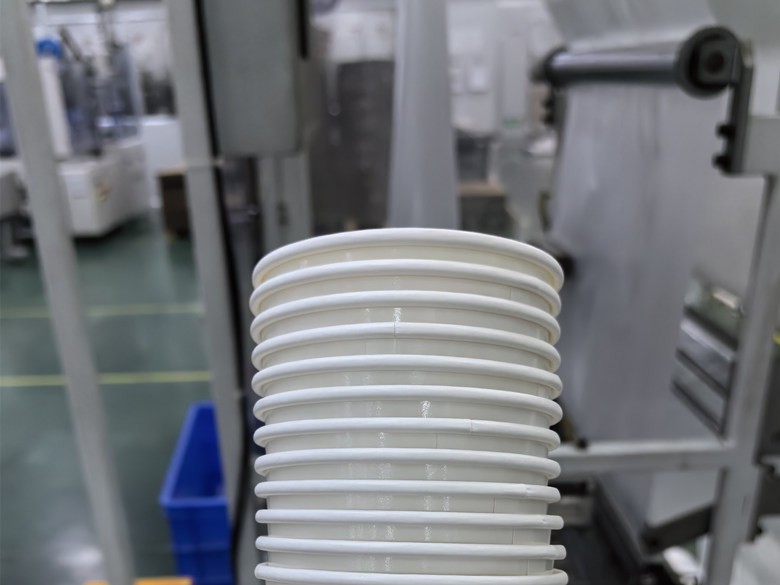
Rim Curling
- After forming the basic shape of the cup, the rim of the cup is curled to create a smooth edge.
- This process is usually done mechanically.

Machine Inspection
- Principle: Automated equipment is used to perform real-time inspection on every paper cup on the production line.
- Inspection Contents: This includes, but is not limited to, checking the size, shape, printed patterns, defects (such as cracks or deformations), and the sealing of the cup rim and bottom.
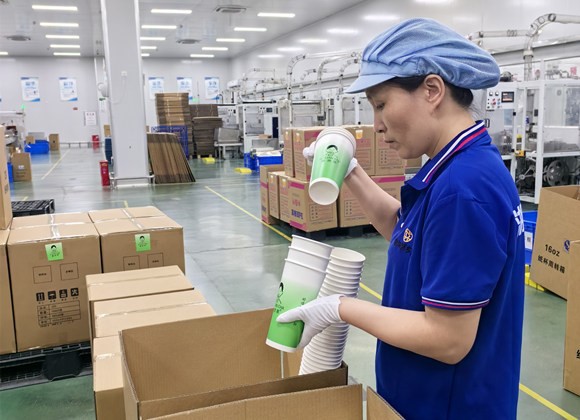
Manual Sampling
- Principle: Quality inspectors randomly select a certain number of paper cups from the production line for quality checks.
- Inspection Contents: Inspectors primarily use visual inspection and tactile evaluation to check the appearance, print quality, and structural integrity of the cups.
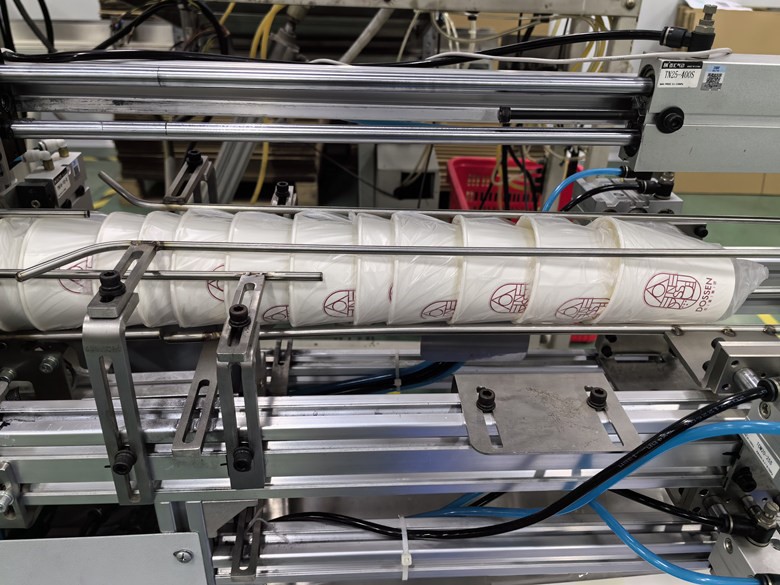
Packaging
- Once the cups pass quality control, they are stacked, bundled, and prepared for shipping.
- Packaging may involve bundling cups into sleeves or boxes for distribution to customers or retailers.

Distribution
Finished paper cups are shipped to various distributors, retailers, or directly to end-users such as coffee shops or event organizers.